
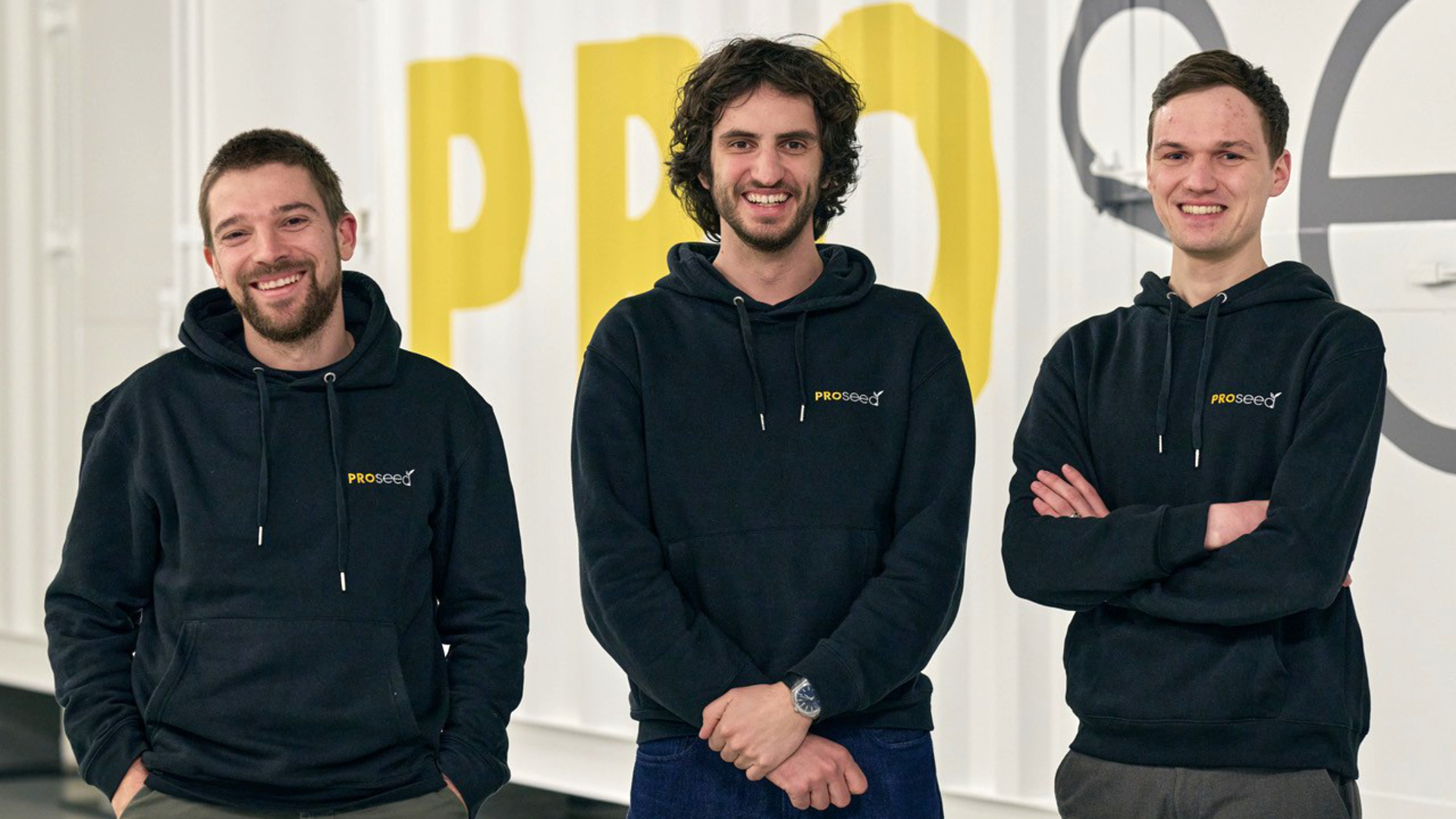
Transforming food industry waste into ingredients for human consumption and harnessing the nutrients they contain: an ecological and technological challenge taken on by Valais-based startup ProSeed. What is the recipe that enabled them to develop an innovative and sustainable solution?
Step 1: Shell Industrial Processes
It all began with an academic project at HES-SO. Whilst analysing industrial processes, Aurélien Ducrey, a food technology engineer, and his fellow students noted that the thousands of tons of residues from the food industry – such as brewery spent grain, tofu by-products and plant-based milks by-products – were considered waste. However, these by-products possess significant nutritional value, which could make them suitable for human consumption. Yet, they are used for animal feed or biogas production, or are simply incinerated. “The internal value chain is not optimised, notes Aurélien. Yet these materials are full of nutrients.” Why isn’t the industry exploiting the potential of these residues?
Together with his colleagues, Aurélien launched a research project to answer this question. The study revealed that the main obstacle to recycling these residues is their excessively high moisture content. This moisture poses both health problems – wet by-products have a short shelf life and rot quickly – and logistical challenges. Furthermore, the raw materials required by the food industry must be dry, yet drying is a complex process to carry out. Based on this analysis, the team decided to develop a technological and environmentally friendly solution based on the circular economy, with a view to improving industrial waste management.
Step 2: Gather All the Ingredients for Success
The founders of ProSeed secured the resources to carry out their project: they made use of the innovation and financing ecosystem, and surrounded themselves with industrial partners. When, in 2022, they decided to submit an Innosuisse Bridge proposal, an EPFL alumnus told them about Alliance and Elise Gortchacow-Bretton, innovation mentor. “Elise completely restructured our application. It was a real in-depth effort,” says Aurélien Ducrey. Beyond the Innosuisse application, she also supported them in preparing pitches and remained available at every stage. Today, Alliance continues to support ProSeed in exploring new European and Swiss projects.
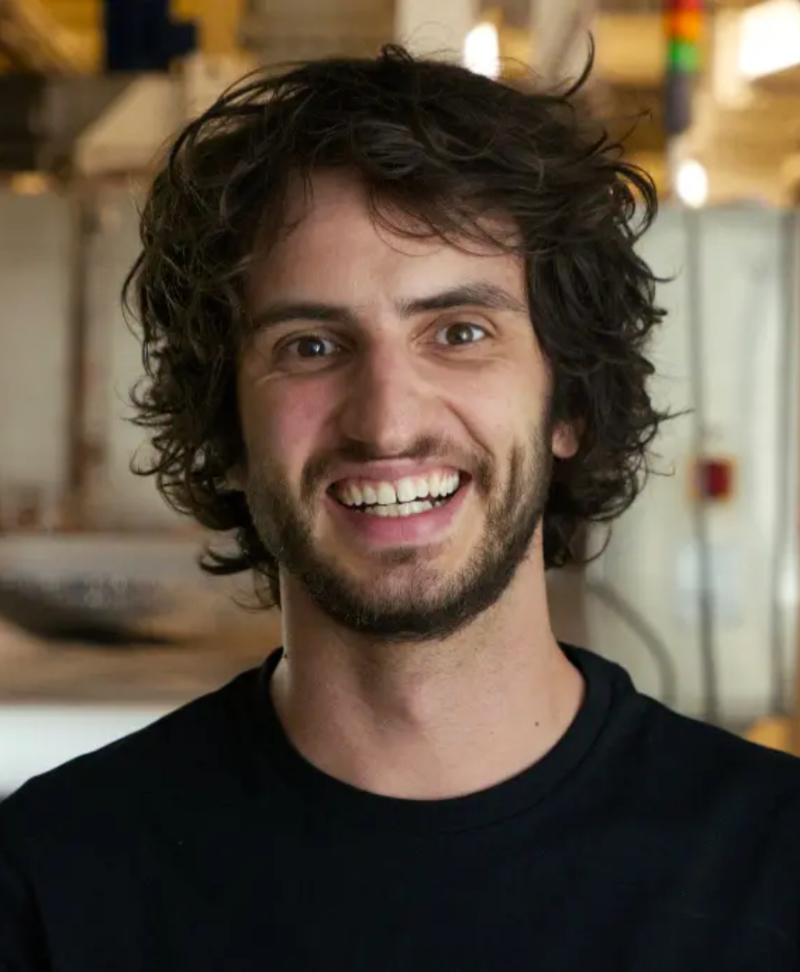
Team is not just the people who work with us on a daily basis; it also includes the network around us and key stakeholders, such as The Ark Foundation, Innosuisse and Alliance, who enable us to focus on our core business.
Step 3: Cook the ProSeed Unit
The team was able to develop its innovative solution. The result of these efforts: the ProSeed Unit, a processing module that dries residues, runs on renewable energy, requires half the energy of existing drying solutions, and is installed directly on production sites. The output of this unit are flakes that can be processed into flour to produce bread, energy bars, or other foor products for human consumption. “We didn’t want to invent a system that would be too complex to integrate. The idea is to create the missing link between the companies that generate waste and those that could use it as resources,” explains Aurélien Ducrey.
The first full-scale pilot has been installed in Martigny, and prospects for growth look promising. ProSeed is currently scaling up its technology to an industrial level so that its units can be installed directly on-site at breweries and companies producing tofu or plant-based milks. Ultimately, the startup aims to expand internationally and export its solution worldwide. “There is a need; the challenge is that we’re entering a new market. We need to find the right positioning and the right business model to meet the need,” explains Aurélien Ducrey.
Driven by robust technology, a market in high demand and an effective support network, ProSeed is reinventing the way the food industry handles its waste and brilliantly succeeding in combining circular economy, sustainability, and technological innovation.
ProSeed at a Glance
Foundation: 2023
Headquarters: Sion
Team: 9 full-time equivalents
Website: proseed.co
Camille Pousin, 18 June 2025.